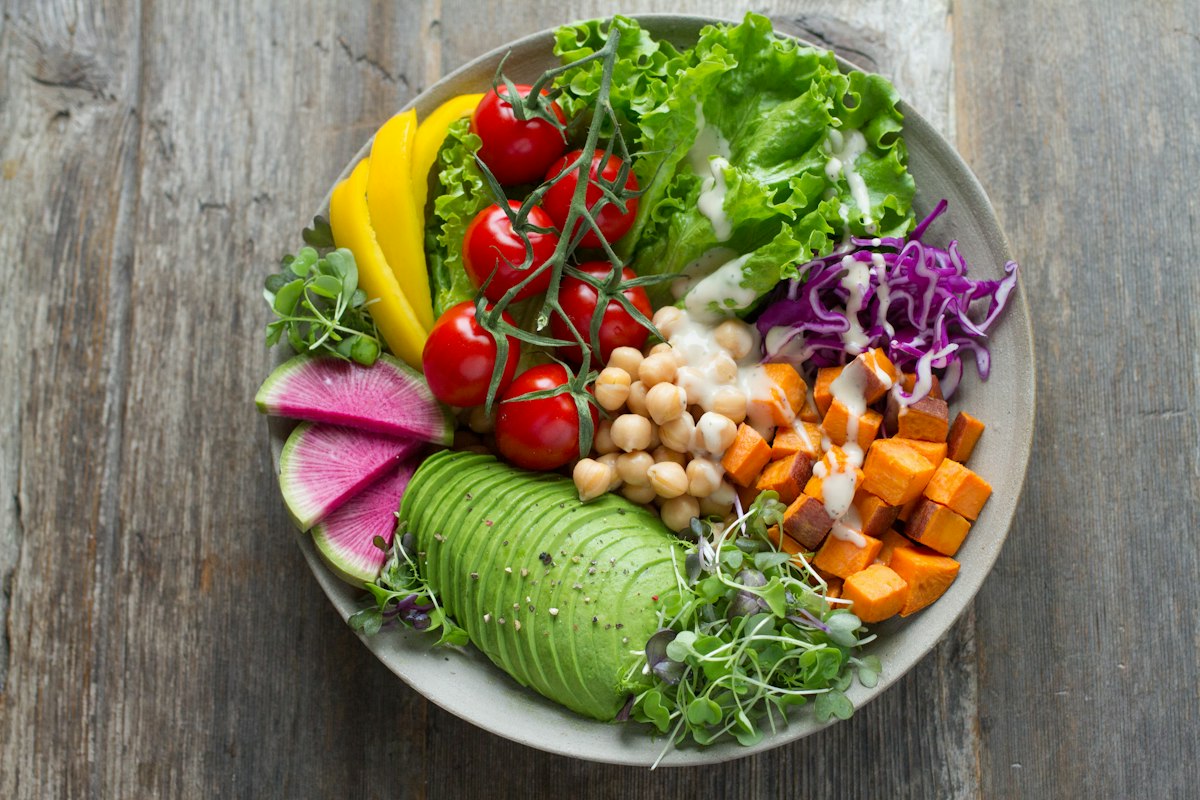
Why gut health matters
If you deal with bloating, irregular bathroom habits, or that heavy, uncomfortable feeling after meals, your gut may be asking for more support. The good news: your everyday food choices can make a real difference.
Your gut is home to trillions of microbes, including bacteria that help break down food, produce beneficial compounds, and support your immune system. Research consistently suggests that a more diverse, well-fed gut microbiome is linked with better digestive and overall health.
That doesn’t mean there’s one perfect “gut health diet.” It does mean that certain foods and habits reliably support digestion, regularity, and a healthier gut environment.
The most important nutrition principle for gut health
If you only focus on one thing, make it this: eat a wider variety of fiber-rich plant foods.
Fiber helps in a few different ways:
- It adds bulk to stool and supports regular bowel movements.
- It helps feed beneficial gut bacteria.
- Fermentable fibers can be turned into short-chain fatty acids like butyrate, which support colon health.
- High-fiber diets are linked with better metabolic and digestive health.
Most adults would benefit from getting closer to these general fiber targets:
- Women: about 25 grams per day
- Men: about 38 grams per day
Many people fall short. If your intake is low now, increase fiber gradually over 1–2 weeks and drink enough fluids to reduce gas and discomfort.
1. Legumes: one of the best foods for your gut
Beans, lentils, chickpeas, and split peas are packed with fiber and resistant starch, which can help feed beneficial gut bacteria.
A practical goal is to eat:
- 1/2 to 1 cup of legumes at least 4–5 times per week
Easy ways to do it:
- Add black beans to tacos or grain bowls
- Stir lentils into soup
- Toss chickpeas into salads
- Blend white beans into pasta sauce for extra creaminess and fiber
If beans tend to make you gassy, start small. Even 1/4 cup per day can help your gut adjust over time.
2. Yogurt and kefir: helpful fermented dairy options
Yogurt with live active cultures and kefir can provide beneficial microbes, and some studies suggest fermented dairy may support digestion in certain people.
What to look for:
- Plain yogurt or kefir with live active cultures
- Minimal added sugar
- Greek yogurt if you want more protein
A useful serving size:
- 3/4 to 1 cup yogurt
- 1 cup kefir
Not everyone needs probiotic foods, and they’re not magic. But if you tolerate dairy, these can be a practical addition to your routine.
If you’re lactose intolerant, you may tolerate yogurt and kefir better than milk because fermentation reduces lactose. Lactose-free versions are another option.
3. Oats: gentle fiber for regularity
Oats are a great source of beta-glucan, a soluble fiber that can support both digestive and heart health. They’re often easier on the stomach than very rough, coarse fibers.
Try:
- 1/2 to 1 cup cooked oatmeal
- Overnight oats with chia seeds and berries
- Oatmeal topped with walnuts and kiwi
For people dealing with constipation, a breakfast built around oats, fruit, and fluids can be especially helpful.
4. Fruit — especially berries, kiwi, prunes, and apples
Fruit gives you fiber, water, and plant compounds that support overall health. A few choices stand out for digestion:
- Kiwi: may help support regular bowel movements
- Prunes: contain fiber and sorbitol, which can help with constipation
- Berries: high in fiber and polyphenols
- Apples and pears: convenient sources of fiber, especially with the skin on
Practical portions:
- 2 kiwis per day if you’re working on regularity
- 3–5 prunes per day to start
- 1 cup berries
- 1 medium apple or pear
If you have IBS, some fruits may trigger symptoms depending on your tolerance. That doesn’t mean fruit is bad for your gut — it means your ideal choices may be more individual.
5. Vegetables and leafy greens
Vegetables help support microbiome diversity because they provide different types of fiber and plant compounds. Variety matters here.
Aim for:
- At least 2–3 cups of vegetables daily
- A mix of colors over the week
Gut-friendly options many people do well with include:
- Carrots
- Zucchini
- Spinach
- Bell peppers
- Cucumber
- Roasted sweet potato
Cruciferous vegetables like broccoli, cauliflower, and Brussels sprouts are highly nutritious, but they can cause gas for some people, especially in large amounts. Cooked portions are often easier to tolerate than raw.
6. Whole grains and resistant starch foods
Whole grains can support digestion through fiber and other nutrients. Resistant starch is especially interesting because it reaches the colon and can be fermented by gut bacteria.
Helpful foods include:
- Oats
- Barley
- Brown rice
- Quinoa
- Whole grain bread
- Cooked-and-cooled potatoes or rice
That last point is worth knowing: when some starchy foods like potatoes and rice are cooked and cooled, part of their starch becomes resistant starch. Think potato salad, rice bowls made from leftover rice, or chilled roasted potatoes added to a salad.
7. Nuts, seeds, and chia or flax
Small foods can make a big difference. Nuts and seeds add fiber, healthy fats, and texture, and flax and chia can be especially helpful for bowel regularity.
Try these portions:
- 1–2 tablespoons chia seeds
- 1 tablespoon ground flaxseed
- 1 ounce nuts
Easy add-ins:
- Stir chia into yogurt
- Add ground flax to oatmeal or smoothies
- Sprinkle pumpkin seeds on salads
If you increase chia or flax, increase fluids too.
8. Fermented vegetables — with a reality check
Foods like sauerkraut, kimchi, miso, and tempeh can be flavorful ways to include fermented foods. They may help diversify your diet, but they aren’t essential, and more isn’t always better.
A good way to use them:
- Add 1–3 tablespoons of sauerkraut or kimchi to a meal
- Use miso in soups or dressings
- Try tempeh as a plant protein option
Watch sodium if you eat these often, especially if you’ve been told to limit salt.
Habits that support better digestion too
Food matters, but digestion isn’t only about food. These basics make a noticeable difference:
1. Eat enough fluids with fiber
Fiber works best when it has water to absorb. If you increase fiber but keep fluids low, constipation can get worse.
A simple starting point:
- Aim for pale yellow urine most of the day
- Include water with meals and between meals
2. Walk after meals
A 10–15 minute walk after eating can help support digestion and may reduce that sluggish, overly full feeling.
3. Slow down a little
Eating quickly can mean more swallowed air and less awareness of fullness. You don’t need perfect mindful eating — just try putting your fork down between a few bites and giving meals 15–20 minutes when you can.
4. Keep meals consistent
Skipping meals all day and then eating a huge dinner can be rough on digestion. Many people feel better with 3 meals or 3 meals plus 1 snack on a fairly regular schedule.
A simple 1-day gut-friendly meal pattern
If you want to put this into practice, here’s a realistic example:
- Breakfast: oatmeal with chia seeds, berries, and plain yogurt
- Lunch: grain bowl with brown rice, roasted vegetables, chickpeas, olive oil, and lemon
- Snack: kiwi plus a handful of walnuts
- Dinner: salmon or tempeh, cooked greens, roasted potatoes, and a side salad
- Optional add-on: kefir or a few prunes if you’re working on regularity
This kind of pattern gives you fiber from multiple sources, plenty of plant variety, and a mix of foods that support digestion without being overly restrictive.
When “healthy” gut foods don’t feel good
This part matters: foods that support gut health in general can still trigger symptoms in some people.
You may need a more individualized approach if you regularly deal with:
- Ongoing bloating or abdominal pain
- Diarrhea or constipation that lasts for weeks
- Symptoms after dairy, wheat, legumes, or certain fruits
- Blood in stool, unexplained weight loss, or persistent fatigue
In those cases, it’s a good idea to talk with a doctor or registered dietitian. Conditions like IBS, celiac disease, inflammatory bowel disease, and lactose intolerance need more than generic advice.
If you want to spot patterns, tracking meals and symptoms in an AI nutrition app can help you notice which foods feel good, which ones don’t, and whether your fiber intake is actually as consistent as you think.
The bottom line
The best foods for gut health usually aren’t exotic supplements or expensive “detox” products. They’re everyday basics: legumes, oats, fruit, vegetables, whole grains, yogurt or kefir, and nuts and seeds.
Start small. Add one fiber-rich food, one fermented food if you tolerate it, and one supportive habit like a short walk after meals. Your gut doesn’t need perfection — it usually just needs consistency.