Best AI Nutrition Apps in 2026: The Complete Guide
The way we think about nutrition has changed dramatically. Gone are the days of flipping through calorie-counting books or manually logging every spoonful of peanut butter into a spreadsheet. In 2026, artificial intelligence has taken centre stage — and the results are genuinely impressive.
But with so many apps flooding the market, how do you know which one is actually worth your time (and money)? We've done the deep dive so you don't have to. This guide covers the best AI nutrition apps available right now, what makes them stand out, and what to look for when choosing one.
What Makes a Nutrition App Truly 'AI-Powered'?
Before we get into rankings, it's worth clarifying what we mean when we say 'AI-powered.' A lot of apps slap 'AI' on their marketing without delivering much beyond a basic algorithm.
A genuinely AI-powered nutrition app should offer:
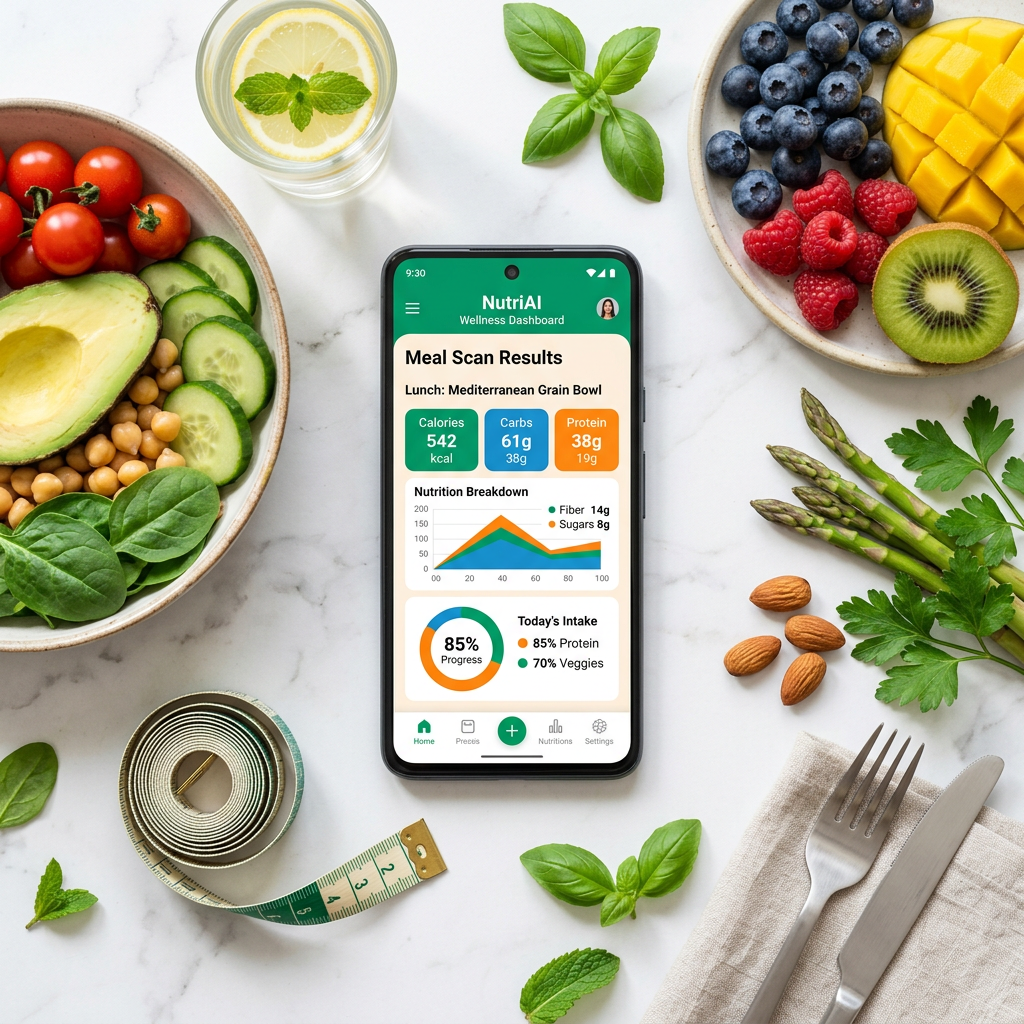
- Meal scanning via computer vision — point your camera at a plate and get an instant nutritional breakdown
- Personalised recommendations — advice that adapts based on your goals, habits, and progress
- Natural language coaching — a chat interface that understands context, not just keywords
- Predictive insights — spotting patterns in your data before you do
- Continuous learning — getting smarter and more accurate the longer you use it
With that benchmark in mind, let's look at what's out there.
The Top AI Nutrition Apps in 2026
1. Nutrify AI (Coming Soon — Early Access Available)
Nutrify AI is shaping up to be the most comprehensive AI nutrition platform of the year. Unlike apps that bolt on an 'AI feature,' Nutrify AI is built from the ground up around artificial intelligence — every feature is designed to personalise, adapt, and improve over time.
Key features:
- AI Meal Scanner — snap any meal for an instant calorie and macro breakdown
- 24/7 AI Nutrition Coach via text and voice
- Smart Pantry that tracks your groceries and suggests recipes
- Personalised workout plans and guided meditation
- Habit tracking with streak monitoring
- Community challenges and leaderboards
What really sets Nutrify AI apart is its Roast My Plate feature — an AI food critic that humorously (but honestly) grades your meal choices. It's gone viral for a reason. Try Roast My Plate at nutrify.info/roast-my-plate — it's free and genuinely addictive.
Nutrify AI isn't widely available yet, but you can join the waitlist at nutrify.info for early access and launch discounts.
2. MyFitnessPal (Premium AI Features)
MyFitnessPal remains a household name for a reason. Its food database is enormous, and recent AI upgrades have improved meal logging significantly. The barcode scanner is fast, and the new AI meal suggestions are decent.
Strengths: Huge food database, established community, broad integrations Weaknesses: The AI feels like an add-on rather than a foundation; premium price for features that feel basic compared to newer entrants
Best for: Users who want a familiar interface with a massive database
3. Lose It! with AI Snap
Lose It! introduced photo-based meal logging a few years ago, and it's improved steadily. The AI Snap feature lets you photograph your food for an estimated calorie count — accuracy is reasonable for common foods but struggles with mixed dishes or international cuisine.
Strengths: Clean UI, solid calorie tracking, good for weight loss goals Weaknesses: AI features feel limited compared to dedicated AI-first apps; coaching is basic
Best for: Straightforward calorie tracking with some AI assistance
4. Cronometer
Cronometer is beloved by nutrition nerds for its micronutrient tracking — it goes far beyond calories and macros to track vitamins, minerals, and amino acids in extraordinary detail.
Strengths: Most detailed nutritional data of any app; great for people with specific deficiencies or medical needs Weaknesses: Steep learning curve; AI coaching is minimal; not beginner-friendly
Best for: Biohackers and people managing specific health conditions
5. Noom
Noom takes a psychology-first approach, pairing calorie tracking with cognitive behavioural techniques. Human coaches are available (though response times vary), and the app uses a traffic light food classification system.
Strengths: Behaviour change focus; human coaching element Weaknesses: Expensive; the 'AI' is limited; can feel more like a course than an app
Best for: People who want accountability and behaviour change support
What to Look for in an AI Nutrition App
Meal Scanning Accuracy
This is arguably the most important feature to evaluate. Ask yourself:
- Can it identify mixed dishes, not just individual ingredients?
- Does it handle portion sizes accurately?
- How does it perform with cuisines outside of American/British food?
The best apps are trained on millions of meal images and continue improving with user feedback.
Personalisation Depth
- Does the app adjust recommendations based on your actual progress?
- Can you set specific goals beyond just weight loss (e.g. muscle gain, managing blood sugar, improving energy)?
- Does the AI coach remember your preferences and past conversations?
Integration with Your Life
- Does it sync with your wearable (Apple Watch, Garmin, Fitbit)?
- Can it connect to your grocery shopping habits?
- Is there a family or household mode?
Privacy and Data Handling
You're sharing sensitive health data — make sure the app has a clear privacy policy and doesn't sell your data to third parties.
The Verdict: Which AI Nutrition App Is Best in 2026?
For established users who want a proven app right now, MyFitnessPal Premium or Cronometer are solid choices depending on your needs.
But if you want to be ahead of the curve, Nutrify AI is the one to watch. It's the only app we've seen that treats AI as the foundation rather than a feature — and the early demos suggest it will leapfrog everything currently available.
Join the Nutrify AI waitlist to get early access, and while you're at it, roast your current meal choices at nutrify.info/roast-my-plate. The AI critique might be humbling — but it's a great wake-up call.
Frequently Asked Questions
Are AI nutrition apps accurate?
Accuracy varies significantly. Apps with dedicated computer vision models trained on diverse food databases (like Nutrify AI's meal scanner) are increasingly accurate, especially for common foods. Accuracy improves when you confirm or adjust the AI's suggestions, helping it learn your preferences.
Can an AI nutrition app replace a registered dietitian?
For general healthy eating goals, an AI app can be extremely effective and far more accessible. For complex medical conditions (eating disorders, kidney disease, cancer nutrition therapy), a registered dietitian is essential. See our article on AI vs Human Nutritionist for a full breakdown.
Are AI nutrition apps worth the subscription cost?
Most premium AI nutrition apps cost between £5–£20 per month. Compared to a single session with a human nutritionist (£60–£150+), the value proposition is strong for everyday use.
Is my health data safe in these apps?
Always check the privacy policy before signing up. Look for apps that clearly state they don't sell personal health data. Nutrify AI's privacy policy is fully transparent about how data is handled.
What's the best free AI nutrition app?
Most AI-powered features sit behind paywalls, but Nutrify AI offers a free tier with generous limits. Join the waitlist to be among the first to access it.
Ready to Transform Your Nutrition with AI?
Join the Nutrify AI waitlist at nutrify.info and try Roast My Plate at nutrify.info/roast-my-plate — your meals have never been more entertainingly judged.